Why Good Spray Foam Insulation Matters
Insulation isn’t exciting to talk about. It’s not an item homeowners usually look forward to selecting. However, home insulation remains the single most effective way to manage utility costs and make your home comfortable. Proper insulation acts as a thermal barrier, keeping heat in during the winter and out during the summer, while also protecting your home’s structural health.
Key points for proper insulation
- Energy and Cost Savings: Average households lose hundreds of dollars annually to air leaks. Quality upgrades can reduce energy costs by 30% to 60%.
- Comfort & wellness: With the efficiency that comes with insulation, your HVAC units will run less, and you can keep your home in comfortable temperatures year-round. It can also help with pollutants and allergens and helps prevent the growth of mold and mildew.
- Property Value: In the modern market, energy-efficient homes are expected. For instance, recent data shows energy-efficient houses can draw significantly higher selling prices.
- Environmental Responsibility: Well-insulated homes require less energy, directly lowering greenhouse gas emissions and the overall strain on natural resources.
Spray Foam Insulation: Pros and Cons
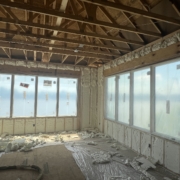
Lutke Construction typically uses spray foam insulation on new custom homes, home additions, and some remodeling projects when applicable. Spray foam is a liquid polyurethane that expands into a solid foam, filling every crack to create an airtight seal. It is widely considered the highest performing insulation available.
Pros
- Highest R-Value: It offers superior thermal resistance, reaching up to R-7 per inch in closed-cell forms.
- Complete Air & Moisture Barrier: Unlike fiberglass, it seals gaps completely, preventing drafts and moisture infiltration that cause mold.
- Structural Support: Once cured, spray foam is rigid and actually strengthens walls and roofs.
- Longevity: It does not sag or settle over time like traditional materials, often lasting 50+ years.
Cons
- Higher Initial Cost: Upfront costs for material and labor is higher, making it more expensive than fiberglass or cellulose.
- Professional Only: It requires specialized equipment and trained contractors to ensure proper mixing and application.
- Off-gassing: This is the biggest reason why foam insulation is not a DIY project. During installation and curing, the material can release volatile organic compounds (VOCs) for 24-48 hours. However, working with an experienced contractor, like Lutke Construction, not only reduces chemical exposure but also ensures proper insulation of volume, no air gaps, etc.
- Irreversible: Once applied, it is extremely difficult and messy to remove if you need to access wiring or pipes later.
More Financial Incentives
For those planning on building a new home or upgrading your current home, in addition to energy savings, there are rebates available with utility companies and some tax incentives for an energy-efficient home.
Bottom Line
If you searching for a way to make your home more comfortable and energy efficient, spray foam insulation can be a game changer. If you partner with Lutke Construction, we can discuss insulation in more detail, along with key items like your HVAC systems and windows to make your home as efficient and comfortable as it can be.